

Horizon Forbidden West Resolution Vs Performance
Horizon Forbidden Westward'due south upgraded performance manner is at present the all-time way to play
Guerrilla Games reveals how it delivered a dramatic comeback to image quality.
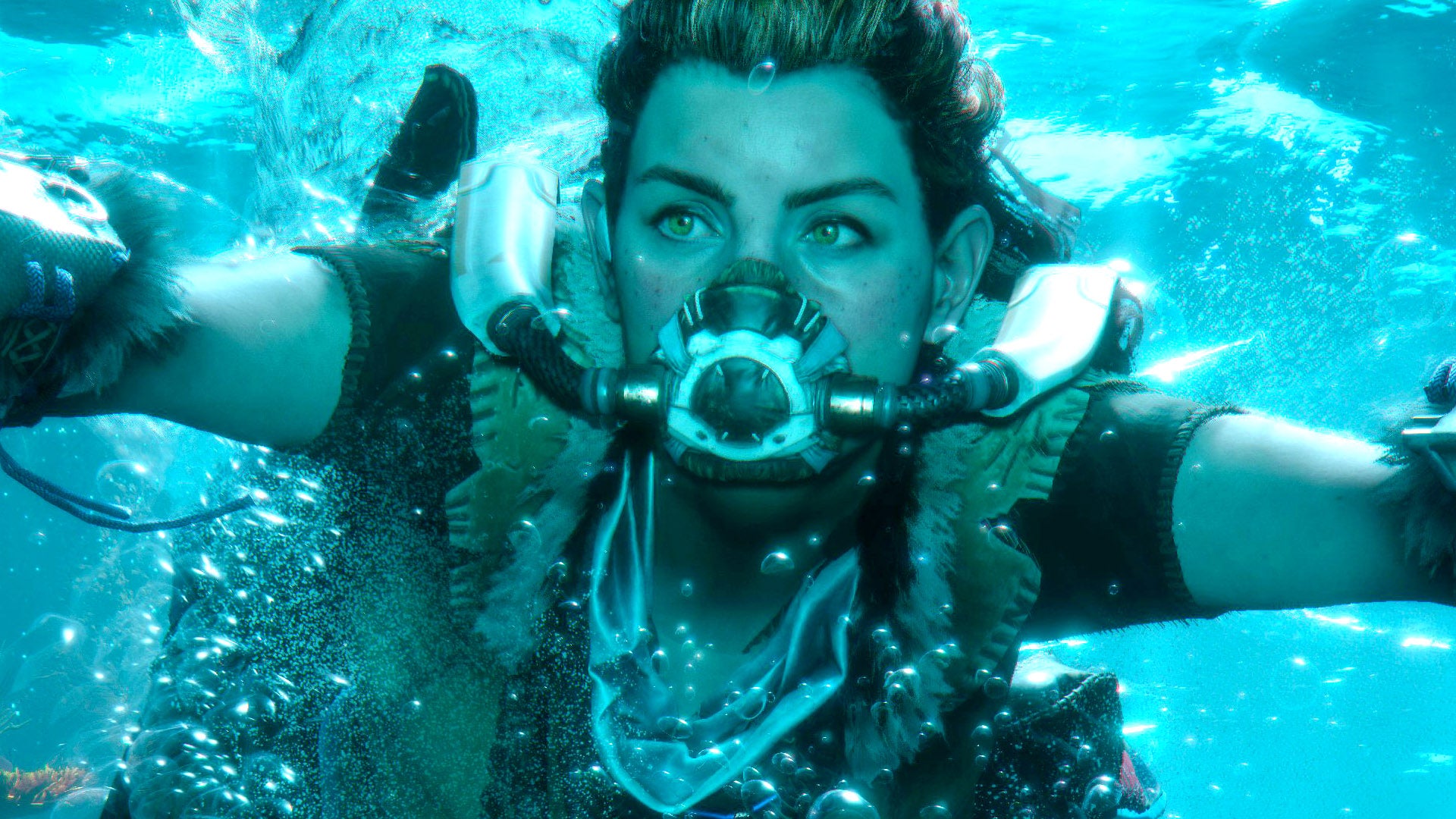
The release of patch 1.sixteen for Horizon Forbidden Due west has finally stock-still visual issues in the 60fps performance fashion of the game, making information technology our new recommended style to play on PS5 versus the 30fps mode we preferred at launch. To find out exactly what changes were fabricated backside the scenes, nosotros spoke to Guerrilla Games, who provided some fascinating item on the game's anti-aliasing solution, and how it's changed since launch.
So what were the original paradigm quality complaints surrounding the 60fps performance mode at launch? In short, this mode gave an aliased, shimmery look to many objects, while fifty-fifty the higher fidelity 30fps style exhibited a different kind of noticeable shimmering inside foliage. Patch 1.07 included 'tweaks to vegetation to meliorate image quality in performance fashion' but it only had a minimal impact on concluding image quality and any remained unhappy with the result.
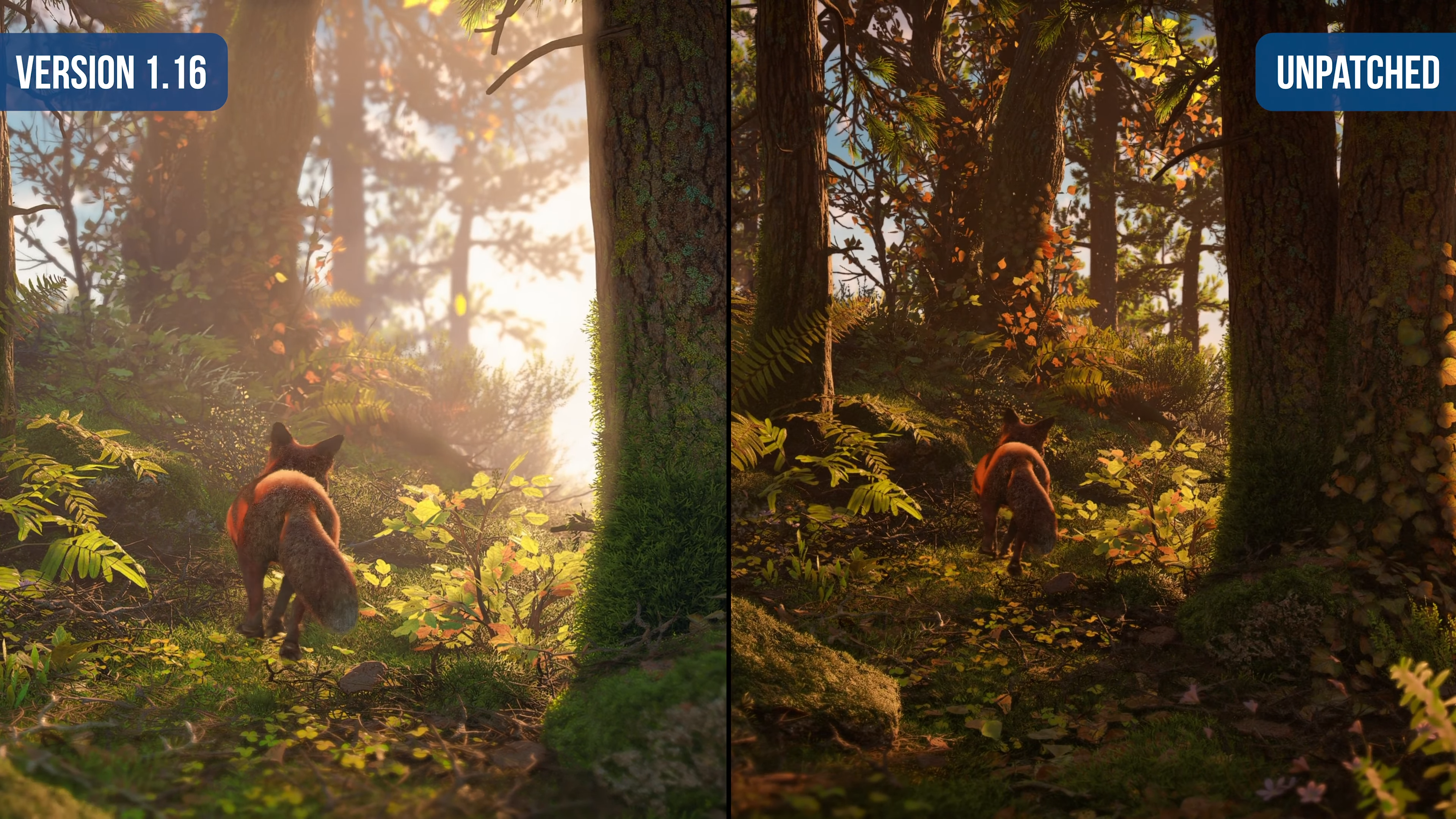
Thankfully, Guerrilla'due south second bite at the reddish in the class of patch one.16 has produced much better results. Looking at moss and vegetation that demonstrated distracting shimmer in the launch version, the upshot seems to have been completely stock-still. The prototype is stable and clean in motion, with nigh all shimmering vanquished. It's a similar situation if you look at the problematic red mist, with obvious visual aberrations in the launch code and a much more coherent advent in 1.16. However, it seems that the red mist is actually no longer visible at greater distances - it only appears close to Aloy at present. Ultimately though, the improvement here is dramatic - so what exactly has changed under the hood?
Senior main tech programmer Giliam de Carpentier at Guerrilla Games was generous enough to provide a highly detailed breakdown of the process: "In the new AA manner, the world is still rendered using the same alternate checkerboard pattern, but now uses a different manner to reuse historic information: the old system just used the current and previous raw return as input for the AA to consummate a native 1800p output in ii frames, while the new system uses the current raw render and the previous AA output equally input for the AA of the new frame. This means it still stabilises to the output resolution in two frames, but now it can besides keep on re-using data from older frames for longer, not but adding more stability nether move, but also accumulating more than sub-pixel detail in the process.
"This concept itself isn't new, but this is complicated to get right and ofttimes comes with its ain prepare of artefacts, such as ghosting, which was prevented inherently in our previous implementation due to its limited reuse of history, even though this did allow pixels to 'shimmer' more than nether move. In item, the previous implementation allowed us to cleanly run all post furnishings earlier the AA pass at checkerboard resolution, which is faster than rendering those effect afterwards at the college output resolution, without introducing ghosting artifacts of sorts.
"And then, switching to a new AA technique that reuses the history for longer meant we had to develop a new pocketbook of tricks that still allowed us to proceed doing this cleanly and robustly, fifty-fifty for furnishings like flower and depth of field, for example. This included improving and further processing the motion vectors themselves, equally well as discover new ways to meliorate refuse all the out-of-date history while reprojecting actual sub-pixel-thin geometry more confidently and correctly over longer periods. In add-on, we also introduced a sharper custom reprojection kernel equally well as output sharpening that changes with the dynamic resolution, which helps bear witness the resolved details more than clearly and combat visual differences in dynamic resolution more effectively."
To boil this downward, Horizon Forbidden West still uses a checkerboard rendering solution to produce a 3200x1800 image. The anti-aliasing pass relies on input frame data to build the final image, and in early versions, only the current and previous raw rendered frames (prior to reconstruction) were used equally this input to produce the final frame. With the new patch, the AA step now combines the current raw frame with the previous complete anti-aliased frame. The final output is nonetheless stabilised in just ii frames, but it can now utilise image data ('history') from prior frames for longer, which helps reduce shimmering and retain more sub-pixel detail. As stated, this isn't a new technique and it does come with a merchandise-off: the more information that is used from previous frames, the greater the gamble that ghost frames are introduced, requiring further tooling from the developer.
In the historic period of 'next generation' upscaling techniques, there's been some confusion as to why Guerrilla persisted with checkerboard rendering and the studio was happy to requite a few reasons why.
"DLSS two.0, FSR 2.0 and checkerboard rendering are all dissimilar ways to render fewer pixels per frame than the bodily output has, and then reconstruct a higher-res consequence over time," explains Giliam de Carpentier. "And so, this means that the altitude between rendered pixels is e'er going to exist bigger than the distance between output pixels. Just with checkerboard rendering, the distance between rows and columns in the rendered paradigm and resolved epitome volition still remain the same, which means that most edges (being typically either mostly horizontal or mostly vertical) won't be able to 'fall through the cracks' as easily and therefore won't as easily get missed completely one frame and be visible the side by side again.
"This results in information that has the potential to go on sparse edges more stable more than reliably but is also more complex to use optimally. But the new custom AA resolve is a definite step up in tapping into this potential, by distinguishing much more reliably between data than tin can be reused (in club to reduce shimmering), and data that has gotten too different (in order to prevent ghosting). And this is still paired with our checkerboard-compatible version of FXAA every bit well to make the nearly out of even unmarried-frame information."
I'm really impressed with the changes Guerrilla has made, only it's worth pointing out that the new anti-aliasing technique is besides deployed in the 4K quality mode - and to be honest, I'm not sure I prefer the new expect. Information technology'southward true that the shimmering effect has gone just the new presentation lacks the pin-sharp precision of the previous version. Given this, weighed upwardly against the solid improvements to the 60fps mode, the latter is now my recommended way to play.
So that's essentially what has inverse with this update and why it required a lot of additional development. Past reconstructing the image with boosted frames of data, there'southward simply more data to work with when it comes to producing the last output - just conspicuously the amount of engineering science required to make and test these changes was substantial.
In addition to these graphical changes, the developers have too made numerous bug fixes and even some major changes to the in-game introduction sequence which sees Aloy prepare out on her long journey. Here, the camera work has been adjusted, lighting position and intensity has been modified and colour grading has even inverse. These sorts of changes aren't limited to the introduction either, with several of the scenes we used for side-by-side testing exhibiting differences across the anti-aliasing improvements.

Beyond the art changes we noted, Guerrilla has also been busy optimising the game significantly since launch, as Giliam de Carpenter reveals: "The team also spent a lot of time post-release looking at how we could clasp more performance out of the PS5, especially around the dynamic resolution system, to give us headroom to improve both quality and effective resolution and prepare the way for this update besides. Some of these optimisations already dropped in previous patches and even new ones were introduced in this patch too."
It's rare to run across such a massive overhaul of a game post launch, so the team at Guerrilla deserves some serious credit for addressing user concerns. The studio could accept left the game alone, just instead they took the actress time to work on a new solution that dramatically improves the game while introducing other improvements across the board. Guerrilla has fifty-fifty stated that it'due south working on calculation VRR back up and a 40fps style that should split the difference between the clarity of the 30fps mode and the responsiveness of the 60fps mode - and that could be another big step frontwards for a game that is already 1 of the best-looking titles of the current console generation.
Source: https://www.eurogamer.net/digitalfoundry-2022-horizon-forbidden-wests-upgraded-performance-mode-delivers-a-dramatic-improvement
0 Response to "Horizon Forbidden West Resolution Vs Performance"
Post a Comment